

Address
The regional figures on this page are drawn from a June 2026 white paper by the Pepperdine School of Public Policy and Beacon Economics. Read the full study (PDF, 51 pages) or the press release announcing it. Supply Chain Federation's own fact sheet (PDF, 3 pages) condenses this page into a printable handout.
Southern California is one of the nation's most important trade and logistics hubs. Warehouses and industrial facilities are an essential part of the infrastructure that keeps goods moving, supports jobs, and connects communities and businesses to the products they rely on every day.
A third of the nation's containerized trade flows through the San Pedro Bay port complex, home to the Ports of Los Angeles and Long Beach. From there, an interconnected network of ports, rail lines, highways, warehouses, and distribution centers helps move goods to businesses and consumers throughout Southern California and across the country.
Warehouses are a critical link in that network. Strategically located near transportation corridors and the communities they serve, these facilities help ensure reliable access to food, medicine and medical supplies, building materials, appliances, and countless other essential products.
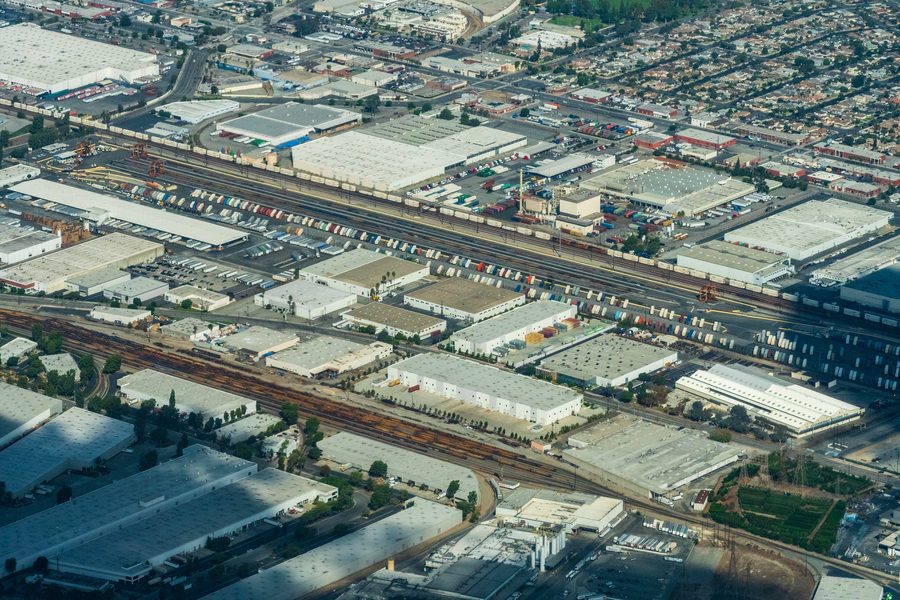
An Economic Engine for Southern California
Southern California's trade and logistics sector — spanning ports, trucking, rail, manufacturing, and distribution — supports jobs, businesses, and communities throughout the region. Industrial space alone, encompassing warehouses, distribution centers, and manufacturing facilities, supports 1.45 million jobs and $196 billion in regional GDP.
- 1.45M Total jobs supported
- $196B Total contribution to regional GDP
- ~11% Share of four-county GDP anchored in industrial space
- 2.5B Square feet across 66,000+ properties
Within that footprint, industrial space also supports 41% of all goods movement jobs and 45% of all manufacturing jobs regionwide.
These facilities are part of an interconnected regional network. Where warehouses are located matters: proximity to ports, major transportation corridors, suppliers, and labor markets helps goods move efficiently and reliably, according to a 2026 study by the Pepperdine School of Public Policy and Beacon Economics. When industrial capacity is displaced, supplier relationships and logistics networks can be difficult and costly to rebuild.
Safe and Well Regulated
Warehouse safety begins long before a facility opens its doors.
Warehouse properties and operations are subject to extensive federal, state, and local requirements designed to protect workers, neighboring communities, and the environment. Depending on the facility and its use, oversight can involve multiple local, regional, state, and federal agencies, and regulatory processes throughout the life of a property.
-
Land Use & Zoning
Cities and counties determine where warehouse facilities may be located and what uses are allowed.
-
Building & Fire Safety
Building departments and fire agencies oversee construction, occupancy, fire protection systems, and ongoing safety requirements.
-
Environmental Review
Local and regional agencies oversee applicable environmental review, stormwater, and hazardous-materials requirements.
-
Workplace Safety
State agencies establish and enforce requirements designed to protect employees and promote safe working conditions.
-
Transportation
State and local agencies review issues including truck access, loading facilities, and traffic impacts.
-
Air Quality
Regional air districts regulate applicable emissions and air-quality requirements.
Compliance is ongoing, not simply a one-time approval. Many requirements involve recurring inspections, testing, filings, renewals, or certifications designed to help ensure facilities continue to operate safely and in accordance with applicable standards.
California has also established statewide requirements for new or expanded logistics facilities through Assembly Bill 98, including standards addressing facility design, siting, truck routing, and idling.
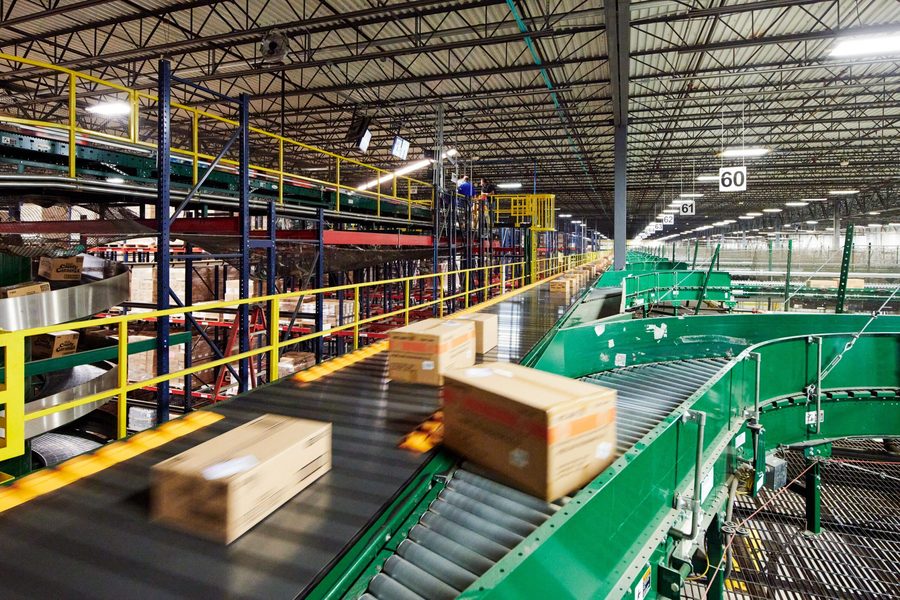
Not All Warehouses Are the Same
The word "warehouse" describes a wide range of facilities with different purposes, operations, and safety considerations. Understanding those differences is important when evaluating safety standards and public policy.
-
Distribution Centers
Receive and store goods in bulk before distribution to retailers, wholesalers, or other destinations.
-
E-Commerce Fulfillment Centers
Store, package, and ship individual products directly to consumers.
-
Cold Storage & Food-Grade Facilities
Maintain temperature-controlled environments for food, pharmaceuticals, vaccines, and other perishables.
Working Together for a Safe, Reliable Supply Chain
The Supply Chain Federation believes safe communities and a strong, reliable supply chain go hand in hand.
We support thoughtful, fact-based approaches to warehouse safety and targeted, risk-based standards that reflect the different ways facilities operate.
Supply Chain Federation is committed to working collaboratively with communities, government agencies, public safety partners, labor and industry to identify practical solutions that enhance safety while protecting the infrastructure, jobs, and reliable movement of goods our region depends on.
Get in touch